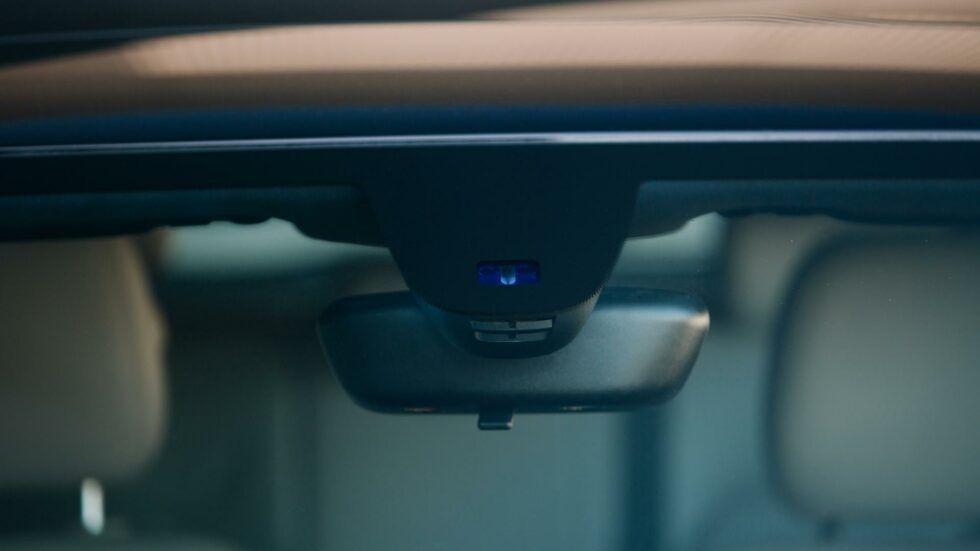
Rain-sensing wipers use an infrared sensor behind the rearview mirror to detect water on the windshield and automatically adjust wiper speed — no manual input needed. Because that same area often houses ADAS cameras, correct glass installation and sensor reattachment matter whenever the windshield is replaced. Here’s how the system works and what to know before a replacement.
How Rain Sensors Detect Moisture
Rain sensors are typically located behind the rearview mirror, where they’re unobtrusive but have a clear view of the windshield. These sensors use infrared light to detect water droplets on the glass. The technology uses either a light emitting diode or infrared light projected at a 45 degree angle onto the windshield. When the glass is dry, the light reflects directly back to a sensor inside of the assembly, however when water is on the glass, it scatters the light and less is reflected back to the sensor. This change is interpreted by the vehicle’s computer, signaling that the wipers need to turn on.
The system is surprisingly precise. It doesn’t just detect the presence of moisture; it also measures the amount of water present. This allows automatic wipers to adjust their speed, which can range from a slow, intermittent wipe to a fast, continuous swipe to match the intensity of the rain. The sensor and processing unit can also differentiate between rain, road spray, or even just a bit of condensation or frost on the glass. The rain sensing system is designed to be able to tell the difference to avoid unnecessary wiper operation.
The Benefits of Automatic Wipers
Beyond convenience, automatic wipers also help with safety. Here are a few of the main benefits:
1. Improved Visibility: By automatically adjusting the wiper speed, drivers maintain a clear view of the road. This is especially helpful in rapidly changing weather conditions.
2. Reduced Driver Distraction: Having one less thing to worry about means drivers can focus more on the road. It’s easy to be distracted by needing to change wiper speed in a heavy shower, or conversely, that you might forget to turn the wipers off after the rain has stopped.
3. Enhanced Safety: Clear visibility is directly linked to safer driving. Rain sensors ensure that your windshield is always clear, helping you to avoid accidents and stay safe.
4. Integration with ADAS: Many modern vehicles with rain-sensing wipers also have Advanced Driver Assistance Systems (ADAS). It’s common for the cameras and sensors used in ADAS to be located in the same area as the rain sensor, behind the rearview mirror. This can include lane departure warnings, automatic emergency braking, and adaptive cruise control.